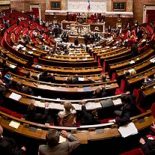
The Voice is Mightier than the Vote
Re-upping this ‘post’ first written when there was no internet!
What follows is a story published in 1990 in the Australian National University student newspaper Woroni, of which yours truly was at the time one of the editors. Ted Mack MP was the first independent in several decades to be elected to the national House of Representatives, starting a trend which developed steadily over the following three decades up to the 2022 election of 12 independents.
I’m struck by the curious fact that we used the term “Voice” in the story title. (Also that we used the term “new” Parliament House – the building was only two years old then!)
___
The Voice is Mightier than the Vote (1990) – Malcolm Baalman and Andrew Howe
Your intrepid Woroni reporters Malcolm Baalman and Andrew Howe trekked the long lonely halls of the new Parliament House in search of the federal Parliament’s most unusual new member: Ted Mack. The recently elected member for North Sydney, Australia’s first federal independent since 1946, has instilled in the voters of his suburban electorate a lasting appreciation of non-party representation. He spoke to us of his aims and expectations.
Ted Mack, originally an architect by profession, first became involved in representing people in 1974, when he became a member of the Council of North Sydney. His involvement in local government almost ended in 1980, but he was persuaded to contest one more Council election. In fact, he led his supporters to win a majority of the Council seats, and it was after that success that the Council elected him Mayor of North Sydney, the position that became the powerbase of his further parliamentary career.
In 1981 he ran for and won the state seat of North Sydney. Thereafter, until 1983, he held both the positions of local member and mayor. His time in the NSW Parliament was spent trying to raise local issues, but his inability to effect legislation in the Parliament made his position purely one of respected public speaker, through the forum of the Parliament. He was re-elected in 1985.
In 1988, only days before he would have become eligible for a generous parliamentary pension granted to Parliamentarians after 7 years of office, he resigned his seat. The action was intended to demonstrate the genuineness of his lack of self-interest in being a popular representative.
Having also resigned his position as mayor, Mack left public life for 18 months. He spent some time travelling around Australia, and was in Queensland during much of the very public Fitzgerald Royal Commission. It was after seeing this lengthy exposure of public corruption that he decided to contest the highest tier of Australian government, the federal House of Representatives.
His [1990] campaign for his local seat, also named North Sydney, was run without the support available to the major party machines. He refused to accept donations of more than $200, sending back cheques for $250 and $500. He also accepted donations only from individuals, nor organisations. Nevertheless the $30,000 bill for Mack’s publicity efforts, mostly the printing of leaflets, was raised through donation and his own personal finances.
Discussing his attitudes to Parliament, his disappointment in the party-oriented nature of the parliamentary system becomes obvious. Parliament, far from being a forum of representatives, is a “charade”, effectively run by the four or five dominant leaders of the ruling party. The ‘Westminster System’, of which so much was made in the Fitzgerald Inquiry, is clearly not a system he would advocate.
Mack points out the existence of a ‘government’ and an ‘opposition’ will not necessarily [lead to] good government. He cites Israel, a government-opposition based system, where the product is often rapidly altering policy and constantly an unstable order, and compares it with Italy, which never produces a majority party, but has maintained consistent policies throughout changing administrations. The irony is that it is adherents of the two party/majority system which insist that they bring about ‘stable government’, whereas in fact it is they, through their ability to force changes on an unwilling majority, who bring about sudden shifts in government direction.
He laments also that those who reach positions of power in the cabinets of Australian governments do so not on the basis of an ability to conduct the office, but because of their position within a political party. It produces an attitude among the elected members that they must toe the party line or never gain any influence over the affairs of government. Party backbenchers do not represent their electorates, he claims, but only the interests of their party and their career. Mack insists that he would always vote as he perceives the majority of his constituents would wish him to, arguing that only such behaviour can genuinely be called representation.
Despite such a saddening list of negatives, Mack is gently optimistic that the systems of Australian government will slowly change to something he considers more satisfactory. The people, he believes, are an inexorable force which will demand change and eventually bring it about.
He predicts that at the next NSW state election [ed: 1991], neither party would win a majority, and independents would begin to hold the fore. Already he has aided another independent to succeed him in tot state seat of North Sydney, and other electors will increasingly come to believe in the merits of electing independent MPs.
The federal Parliament, however, is not so close to being lost to the major parties, and he makes no firm prediction about when his hope might be realised.
Ted Mack’s quiet confidence in the changing attitude of the people may well be justified. Only time will tell if change actually comes about. Meanwhile, the member for North Sydney will, for at least one term of Parliament, represent the people of his electorate – possibly the only person in the federal Parliament to genuinely do so.
Whether one approves or disapproves of Ted Mack and his recent electoral success will depend on whether one supports or despises political parties, for Ted Mack is very definitely their soft-spoken enemy. Indeed, if the public support that brought him to office in the federal Parliament spreads out from North Sydney to the rest of the nation, history may lift him up as their nemesis.
___
Retrospective (2024):
These amateur journalists (OMG so many typos!) wrote the story above 34 years ago, and yet much of it still speaks to what happened in the 2022 federal election.
To give some historical context, Mack (1933-2018) started his political career in North Sydney local government. His subsequent election to the NSW Parliament in 1984 was part of a surge of independent MPs winning seats in the NSW legislative Assembly over multiple elections. Four independents (including Ted Mack) were elected to the 1984-88 NSW state parliament, and a remarkable seven independents were elected to the 1988-1991 state parliament, but as these crossbenchers did not hold the balance of power their portentous start to the modern era of independent politicians has been largely overlooked.
In 1990 Mack then successfully switched to winning election to the federal parliament. He won two terms in the House of Representatives in 1990 and 1993, before retiring at the 1996 election.
The 1990 election was the fourth victory out of five for the 13-year Hawke-Keating Labor government. Hawke led Labor to victory in 1990 with a healthy majority in the House, and felt no need to give the Mack, the sole member of the crossbench, any political attention during the term.
Mack was re-elected in 1993 (and joined by a second federal independent in Phil Cleary), but chose not to run at the 1996 election, once again citing his deliberate desire to avoid becoming eligible for a parliamentary pension. That year the North Sydney seat was recovered for the Liberal Party by a young Joe Hockey. Hockey would go on to be a leading figure in the Liberal party for 20 years, but it is curious to note Wikipedia’s analysis that “when the Liberals held their preselection contest for the seat, they did not know at the time that Mack would not renominate, and Joe Hockey won the nomination with very little opposition. It is widely believed that Hockey would have faced a more rigorous preselection contest had it been known that Mack was retiring.”
The 1987-89 Fitzgerald Commission of Inquiry in Queensland, which so influenced Mack, was a major and highly effective investigation into corruption in the Queensland police force, which also exposed serious corruption throughout the state’s governance system. To this day it is cited as one of the seminal events in a long history of efforts to improve integrity in Australian political systems.
Mack’s views about the polity stability of Italy and instability of Israel are notable, but also contestable. Italy was indeed on a fairly stable economic development trajectory for some decades after WWII, despite changing administrations, but since that time there have been several attempts to use electoral systems which contrive to give a leading party coalition an artificial majority in its parliament – not always successful. Israel still has one of the world’s most multi-party electoral systems, and has had periods of both stability and instability (with four elections in recent years all resulting in fractious coalitions).
His criticisms of the ‘Westminster System’ were probably not correctly captured in the story text by the youthful reporters. He doesn’t appear to be criticising the system of representative and responsible government on which our constitutional system is based, nor the idea of accountability of ministers to Parliament, but rather he seems to object to the adverse effects which overlaying political parties onto that system was having.
Commenting for the interview in mid-1990, Mack’s prediction that the 1991 state election would see an independent crossbench hold the balance of power proved to be entirely correct. The four powerful 1991-95 state independents included Tony Windsor (for the electoral division of Tamworth, at the early stages of a multi-decade career which was part of independent support in several federal and state electorates in the New England region), Peter Macdonald (Manly, part of what is now the federal electorate of Warringah held by Zali Stegall MP), Clover Moore (Bligh, partly in the federal electorate of Wentworth now held by Allegra Spender MP, the second recent federal independent in this division), and integrity campaigner John Hatton MP (South Coast). Largely representing traditionally conservative seats, the crossbench supported a Liberal-National Coalition government, which in any case had won 3 more seats than the ALP. The Liberal Party lost Premier Nick Greiner to scandal during the term, but the independents ensured stability of government by backing his Coalition replacement as leader and Premier.
As for the prospects for national parliamentary independents, Mack foresaw that “the public support that brought him to office in the federal Parliament [would] spread out from North Sydney to the rest of the nation”, but he cautiously did not predict when that might happen. While independents across all Australia parliaments have certainly become more common since the late 1980s, it was not until 2022 that electoral change of the kind Mack imagined came to pass.
Other premonitions of the future can be heard in that 1990 story. The title of the Woroni article starts with the word ‘voice’ – the very idea which was to become the core of the redirection of independent voting attitudes that began in north-eastern Victoria in 2012 through the Voices of Indi group, which saw Cathy McGowan elected in 2013. The ‘Indi model’ has since seeded dozens of Voices of groups around the nation, with a culture based on kitchen table conversations; the ideas of voice, conversation, discussion, being heard, and representation flow through this movement, in a way Mack would certainly recognise.
The record of 7 independents elected to the NSW Legislative Assembly in 1988 stood for over three decades, until 9 independents were elected at the 2023 state election. The current Labor government lacks its own majority, although only by 2 seats, and the 9 independents and 3 greens give it a pretty good margin of safety.
The structural elements of our parliamentary system have changed little in the intervening 34 years, but the persistent demand for independent voices of the electorate has grown steadily, and in 2022 has started to fulfil the more expansive visions of founders such as Ted Mack.
 On Elections